Claire Birkenshaw
“I have fooled everyone for so long that I thought I should never be found out.”
(The Wonderful Wizard of Oz)
One of the most memorable plot twists in children’s literature occurs in The Wonderful Wizard of Oz (Baum, 1900) when the collapse of a carefully constructed façade reveals that the seemingly omnipotent Wizard of Oz is not the powerful figure he appears to be, but rather a “humbug”—“just a common man” (ibid., p.46) whose authority derives not from the supernatural, but from technological trickery. In this sense, Baum’s novel invites readers to reflect on the ways their own lives may be shaped by individuals and institutions that appear all-powerful but are, in reality, “false” wizards (ibid., p.47). As Donovan (2006, p.38) argues, the novel’s exposure of the “irrational” and “incomprehensible” power structures of adult society is made possible because Dorothy Gale—the protagonist—is a child. Positioned in opposition to the adult world she encounters, Dorothy occupies the role of an outsider whose perspective enables both her and the reader to question assumptions that others accept without scrutiny. Through Dorothy’s eyes, Baum explores the taken-for-granted political and cultural structures that shape everyday life, both within the imaginary Land of Oz and beyond it.
Dorothy’s journey can therefore be read as a metaphor for sociological inquiry. Her outsider status enables her to adopt a critical perspective towards the social world she encounters, reflecting the sociological practice of making the familiar appear strange. Despite the numerous obstacles she faces, Dorothy remains committed to achieving her goal of returning home to Kansas, demonstrating a persistence that parallels the sociologist’s pursuit of understanding. Moreover, although Dorothy initially appears small and powerless, she ultimately possesses greater agency than either she or those around her recognise. In this respect, she embodies what Donovan (ibid.) describes as “culture’s underdog”, a position that parallels the sociologist’s role in questioning dominant assumptions and revealing hidden structures of power.
For sociologists Woodman and Threadgold, the purpose of sociology is to uncover the “hidden dimensions” that “shape our social worlds” and to “better understand how power works” (2021, p. 1, emphasis in original). They argue that combining the promise of Mills’ (2000) sociological imagination with a sociological gaze enables individuals to recognise that choices which appear freely made remain shaped by wider systems of power, culture and social control. This perspective is particularly significant in societies that place considerable value on the idea of individual freedom of choice. To assist students in developing their sociological imagination and gaze, Woodman and Threadgold propose four interconnected lines of sociological inquiry.
Historical questions explore how contemporary social practices, beliefs, and institutions have developed across time and space, examining their origins and transformations.
Cultural questions investigate how shared values, norms, meanings, and beliefs influence how individuals interpret the world and organise their behaviour.
Structural questions examine how social institutions and broader economic and political systems shape opportunities, experiences, and life chances.
Critical questions challenge existing social arrangements by considering whose interests they serve, revealing underlying power relations, and exploring alternative possibilities for organising society.
Together, these questions encourage students to move beyond individual experiences and examine the broader social forces that influence human behaviour and social organisation. As analytical tools, they can be applied to a wide range of contexts, including cultural texts such as literature and film, to illuminate sociological concepts and deepen understanding of the social world.
As such, a student’s sociological gaze can be directed toward the study of children’s literature because such texts play an important role in shaping how readers understand themselves and the social world. As Reynolds (2011, p. 1) observes, “for the most part, however, what children’s literature is, is taken for granted.” Yet, because children’s literature is often among the first forms of storytelling encountered by young readers, it can have a lasting influence upon their assumptions, values, and perceptions. Indeed, Reynolds (ibid., p. 4) argues that “because children’s literature is one of the earliest ways in which the young encounter stories, it plays a powerful role in shaping how we think about and understand the world.” Consequently, children’s literature represents a particularly fruitful site for sociological thinking because it both reflects and reproduces wider social understandings, values, and power relations. One such novel that can act as a sociological springboard is The Wonderful Wizard of Oz by L. Frank Baum.
Published in 1900, The Wonderful Wizard of Oz was the first in a series of fourteen books depicting the mythical land of Oz. According to Zipes (2009, p. 32), Baum’s collection of Oz stories constitutes a profound American “fairy tale saga” because of the “political and cultural commentary” embedded within it. Over time, the series has come to be regarded as a “touchstone for American fantasy literature” (Duncan, 2024, n.p.). Consequently, Baum’s Oz opus has generated a substantial body of scholarship from a variety of interpretive perspectives, including politics (Littlefield, 1964), Ancient Greek mythology (Bär, 2015), and masculinity (Suzuki, 2025). Despite this diversity of approaches, The Wonderful Wizard of Oz itself has received comparatively little attention from an explicitly sociological perspective examining Oscar Diggs—the man who would become the Great and Terrible Wizard of Oz (whose name was not revealed until Dorothy and the Wizard in Oz (Baum, 1908))—and his trajectory from outsider to ruler of the Emerald City before his eventual departure. This blog seeks to address that gap by questioning what is often taken for granted within Oz’s social and political order. Specifically, it asks two related questions: how did Oscar Diggs construct and maintain his authority over the Emerald City, and what enabled the apparently smooth transfer of power to the Scarecrow following his departure? To answer these questions, it is first necessary to situate Baum’s novel within the political and intellectual milieu in which it was written.
Greenlees (2016) reminds us that, in the years preceding the novel’s publication, the United States experienced profound economic and social disruption. Farmers faced declining agricultural prices and mounting debt, while industrial workers endured widespread unemployment following the economic depression of 1893. These developments formed part of wider debates concerning economic inequality, social order, and the United States’ emerging imperial role, in which ideas of progress, civilisation, and the ‘civilising mission’ gained increasing prominence. One influential participant in these debates was the sociologist William Graham Sumner (1840–1910), whose advocacy of social Darwinism led him to oppose state intervention in the economy and efforts to reduce social inequality (American Sociological Association, n.d.). The Wonderful Wizard of Oz emerged during a period in which questions of who should govern, by what means authority should be exercised, and what constituted legitimate rule occupied political, intellectual, and popular discourse. These debates provide an important historical context for examining the Wizard’s rule through contemporary sociological theories of power. They also illuminate why questions of civilisation, progress, and legitimate authority occupy such a prominent place within Baum’s narrative, where claims to superior knowledge, civilisation, and moral authority repeatedly function as sources of political power.
To understand Diggs’ power trajectory, I examine it through four complementary sociological perspectives: those of Pierre Bourdieu (1930–2002), Michel Foucault (1926–1984), Jean Baudrillard (1929–2007), and Antonio Gramsci (1891–1937). Each offers a distinctive perspective on the construction and reproduction of authority. Bourdieu is employed to examine Diggs’ arrival in Oz and the acquisition of symbolic power associated with being a Wizard; Foucault to analyse the Wizard’s use of governmentality in the Emerald City; Baudrillard to explore the role of simulation and simulacra in sustaining the Wizard’s authority; and Gramsci to explain the Wizard’s hegemonic project, through which his authority became institutionalised and survived its founder. Together, these perspectives illuminate the social processes through which power was constructed, maintained, and reproduced in Oz. The analysis begins with Pierre Bourdieu, whose concepts of symbolic capital and symbolic power provide a useful framework for understanding how Diggs, an ordinary man from Omaha, first came to be recognised as a figure of extraordinary authority in Oz. Rather than treating TheWonderful Wizard of Oz simply as a children’s fantasy, this blog demonstrates how reading the novel sociologically reveals hidden processes through which authority is constructed, legitimised and reproduced. In doing so, it illustrates how the sociological imagination can transform an apparently familiar story into a rich case study of power.
The Bourdieusian Wizard of Oz
After the revelation that Oz was not the Great and Terrible Wizard, as he and others had claimed, but merely a “common man” (Baum, 1900, p.46), his confessional conversation with Dorothy reveals the circumstances that led him to become the ruler of the Emerald City. Now a “little old man” (Baum, 1900, p.47), Diggs recounts how he had arrived in Oz “a great many years ago” (Baum, 1900, p.47) when he was much younger. Like Dorothy, Oscar Diggs originated from the United States. He came from Omaha, Nebraska, whereas Dorothy was from rural Kansas. Although their backgrounds differed, both arrived in Oz accidentally, carried there by forces beyond their control. Dorothy was transported in her family’s one-room farmhouse, while Diggs was swept into Oz aboard a circus hot-air balloon.
As Diggs’ balloon floated across the unfamiliar landscape, he was struck by its beauty. As his balloon came to rest, Diggs found himself among “strange” (Baum, 1900, p.47) people—Ozites—who, seeing him descend “from the clouds” (Baum, 1900, p.47), thought him to be “a great Wizard” (ibid.). Recognising that they were afraid of him and willing “to do anything” (ibid.) he wished, Diggs deliberately allowed this belief to persist, establishing the initial asymmetrical social relationship that would ultimately enable his transformation from an ordinary American showman into the creator and seemingly omnipotent ruler of the Emerald City.
To better understand the asymmetrical relationship that develops between Diggs and the Ozites, Bourdieu’s sociology is particularly instructive. Central to this analysis is the concept of habitus, alongside the related concepts of field and capital. Together, these concepts explain how the historically constituted dispositions of Diggs and the Ozites shaped their mutual perceptions and enabled the emergence of symbolic domination.
For Bourdieu (1990, p. 56), habitus is “embodied history”: the product of past social conditions and experiences that generates durable, transposable dispositions through which individuals perceive, evaluate and act in the world. Habitus is not simply cognitive but also affective. As Threadgold (2020, p.52) argues, it is entangled with a lifetime of affects, as repeated experiences of situational feelings and emotions gradually become sedimented into “beliefs, temperaments and preferences.” These embodied dispositions subsequently prime either instinctive responses or reflexive deliberation, depending on the circumstances encountered. In other words, habitus informs an anticipatory and practical ‘feel for the game’ (Bourdieu, 1990, p.66) within particular social fields, each structured by distinctive relations of power and forms of capital.
Diggs’ habitus was largely formed within the expansionist social conditions of the late nineteenth-century United States, his dispositions reflecting the gendered, classed and racialised structures of the Gilded Age together with his education and theatrical experience as a ventriloquist and circus balloonist. By contrast, the Ozites’ habitus has developed within a relatively isolated agrarian society characterised by frugality and longstanding dispositions towards the authority of wizards, witches, magicians and sorcery. As Diggs drifted over Oz in his familiar hot-air balloon, he interpreted the unfamiliar landscape through the classificatory schemes and doxic assumptions embodied within his habitus. Given the unfamiliarity of Oz and its people to him, he perceived the inhabitants of Oz as strange because they failed to correspond to the classificatory schemes through which his habitus organised social reality. Noting the lack of urban and industrial forms, he misrecognised (Bourdieu, 1977) the meaning of the Ozites’ social world and regarded it as less civilised because urbanity, industrial development, and technological sophistication functioned within his own doxa as self-evident indicators of progress, even though they were, in reality, arbitrary social values rather than universal standards. These perceptions generated not simply a cognitive judgement but an embodied sense of superiority which was heightened when he observed the Ozites were afraid of him.
For the Ozites their witness of Diggs descending from the clouds in an unfamiliar technological device constituted an extraordinary symbolic event that they interpreted through existing categories such as wizard, witch, and magician. Because these figures were already associated with exceptional power and danger, Diggs was immediately feared and invested with authority. Within the field of Oz, the balloon became recognised as symbolic capital. The balloon possessed no inherent political power. Rather, its symbolic efficacy derived entirely from the meanings collectively attributed to it within the Ozian field. Although technologically mundane within Diggs’ own social world, within the classificatory schemes of Oz it signified extraordinary powers, immediately converting an unfamiliar artefact into legitimate authority. Similarly to Diggs, the Ozites misrecognised what was happening too. From their perspective the source of Diggs’s authority was supernatural power not the symbolic processes through which his authority had been produced. This exemplifies what Bourdieu (1991) calls social magic: the capacity of symbolic acts and classifications to produce real social effects through collective recognition. The spectacular arrival of Diggs thus functioned as an act of collective consecration through which the Ozites recognised and named him as Oz, the Great Wizard, thereby instituting a new political order (ibid.). His authority was not simply imposed from above but co-produced through implicit collusio (Bourdieu, 2000). This practical complicity did not require conscious agreement. Rather, both Diggs and the Ozites acted according to dispositions that rendered the emerging social order intelligible and therefore sustainable. By concealing his ordinary identity, Diggs not only preserved the symbolic conditions necessary for this belief to endure, enabling the symbolic capital generated by his arrival to be converted into political authority, his silence also preserved the illusiothrough which the Ozian field of power remained invested with meaning, ensuring that the game continued to be believed in and therefore would serve his emerging political interests.
In this sense, Diggs’s rule illustrates Bourdieu’s broader argument that political authority depends upon collective belief in its legitimacy and that belief in the State helps produce the State itself (Bourdieu, 2020). Through collective recognition, Diggs accumulated sufficient symbolic capital to mobilise Ozite labour and resources within Oz’s field of power to be able to order the construction of the Emerald City for his protection. While Diggs claimed the Ozites complied with his orders “willingly and well”, suggesting they had enthusiastically submitted to his rule, he discounts the possibility that he served Ozite interests too. Not only would he be their Wicked Witch protector, his advanced technological knowledge would help them prosper. In effect, the habitus of both Diggs and the Ozites generated a practical sense of the objective chances available within the evolving field of power. Faced with the threat of Wicked Witches, both Diggs and the Ozites did not consciously calculate a strategy so much as instinctively exploit opportunities that appeared both intelligible and achievable given their past experiences.
If Bourdieu helps explain the magical genesis of this authority, Foucault offers a complementary framework for analysing how that authority was organised and exercised through governmentality within the urban form of the Emerald City.
The Foucauldian Wizard of Oz
Before Dorothy’s eventual arrival at the gates of the Emerald City, she was already entangled in the Wizard’s arrangement of power. Through conversations with others, she learned that the wondrous Emerald City was home to Oz, the Great and Terrible Wizard. Indeed, Oz’s greatness and terribleness were so deeply revered and feared that he was sometimes spoken of in whispers, as though he possessed the ability to hear conversations about himself even when absent. Dorothy consequently came to imagine the Emerald City as a place of immense authority and wonder, her expectations already shaped by the circulating discourses surrounding the Wizard long before they met. The city occupied her thoughts so completely that it even appeared in her dreams. As she followed the yellow brick road, Dorothy’s conduct had begun to be conducted by Oz before she ever entered the city. Yet it was only upon entering the Emerald City itself that these governmental relations became explicit, shaping her conduct in far more direct and intensive ways.
After gaining admittance into the city’s gatehouse, Dorothy was questioned about the purpose of her visit by the Guardian of the Gates. Having passed this first examination and before she could proceed further, she was subject to the secure fitting of protective green-tinted spectacles by order of the Wizard. According to the Guardian they were a necessary adornment designed to reduce the city’s blinding glare. Once the spectacles were securely locked into place, she was permitted to pass through yet another set of security gates, giving her access to the internal body of the city. Upon entering the city, Dorothy noticed that everything possessed a green hue, including its citizens. She also observed that everyone complied with the Wizard’s compulsory spectacle order.
As she headed toward the centre of the city where Oz’s palace lay, she detected she was subject to silent scrutiny by the city’s many residents, including its children, because she was a stranger. Everything Dorothy encountered confirmed what others had told her about the city’s beauty and magnificence. There were familiar structures too. She noticed that the Ozites lived in houses, not one-roomed like hers in Kansas, but ones that were “beautiful” (Baum, 1900, p.32). These beautiful houses were found along streets adjacent to the city’s imposing perimeter wall. Streets closer to the city’s centre were lined with “many shops” (ibid.) selling wares that were recognisable to her: candy, popcorn, lemonade, hats, shoes, and clothes. To Dorothy, everything appeared orderly, while the city’s inhabitants “seemed happy, contented and prosperous” (ibid.)
At the city’s centre was the commanding domed Palace of Oz, the Wizard’s official residence. The Palace was gated and guarded. Yet again, Dorothy had to navigate another security system before being allowed to proceed further. Once inside the Palace she was made to wait a “long time” (ibid.) in a holding room before learning from a soldier that she would be granted a conditional audience with Oz. Before seeing Oz, however, she had to “remain in the Palace for several days” (ibid.). During her time in Oz’s Palace, Dorothy noticed the Wizard used strict timetables and sound signals, such as bells and whistles, to control movement within the building. Furthermore, she became aware that the Palace’s many individual rooms had their own specific location, architectural form, purpose, furnishings and affective atmosphere. For example, the Palace ‘great room’ was located next to Oz’s intimidating Throne Room, and was where the richly attired “ladies and gentlemen of the court” (ibid., p.33) gathered every morning to talk to one another and wait for shuttled communiques and instructions from the unseen Wizard. Like the observed orderly conduct outside of the Palace, conduct within the Palace was equally as orderly. At every level, the Emerald City’s grandeur, organisational arrangements and good order seemed to impress Dorothy, continually reaffirming the Wizard’s authority.
While Diggs, during his confession to Dorothy, may have framed the construction of the Emerald City as an innocent project designed to “amuse” (Baum, 1900, p.47) himself and keep the Ozites “busy” (ibid.), his casual explanation of the city’s origin obscures the city’s more significant political function: it serves as a crucial instrument in producing and sustaining the public truth that Diggs is, in the hearts and minds of the Ozites and the Witches, Oz, the Great Wizard through governmentality.
Foucault’s concept of governmentality at its simplest formulation is the art of conducting conduct through governing. In other words, “a way of acting upon the actions of others” (Schirato, Danaher, and Webb, 2012, p.69). Foucault’s (2007, p.108) more expansive definition is: “the ensemble formed by institutions, procedures, analyses and reflections, calculations, and tactics that allow the exercise of this very specific, albeit very complex, power that has the population as its target, political economy as its major form of knowledge, and apparatuses of security as its essential technical instrument.” As Foucault (2007) argues, government operates not merely through commands or coercion but through the production of truths that shape collective understandings and, in turn, people’s conduct. The Emerald City’s architecture, rituals and technologies function precisely in this way, cultivating beliefs about the Wizard that become self-reinforcing through everyday practice. Rather than functioning merely as Wizard’s residence, the Emerald City operated as a governmental apparatus through which the Wizard sought to conduct the conduct of the Ozites by shaping what they saw, believed, expected and, ultimately, how they conducted themselves. How was this achieved by Diggs? Four tactics targeting the Ozite population can be discerned.
First, Diggs utilised the Ozites fear of Wicked Witches to provide the rationale for the construction of a defensive structure which incorporated various security systems including thick walls, gates and security personnel, such as the Guardian of the Gate and soldiers. Wicked Witches, therefore, functioned not merely as enemies of the Emerald City but as the conditions of possibility for the Wizard’s authority. The persistent presence of the Wicked Witches beyond the city walls provided the conditions through which a governmental rationality centred upon security could emerge. In Foucauldian terms, the preservation of the Emerald City’s political order became its own justification, exemplifying what Foucault (2007) describes as raison d’État. This enabled Oz to legitimate forms of regulation and control that might otherwise appear unnecessary. In this way, fear itself becomes a technology of governance. Rather than simply provoking obedience, fear continuously reproduces the conditions under which the Wizard’s governmental interventions appear necessary. Without this manufactured insecurity, the governmental rationality that legitimised the Wizard’s extensive security apparatus would become increasingly difficult to sustain.
Second, Diggs organised urban space so that the city itself became an instrument for governing conduct. Different urban spaces were arranged so that each encouraged particular forms of conduct: domestic life, economic enterprise and governmental administration. From a Foucauldian perspective these spatial arrangements did more than impose order through classification and discipline (Huxley, 2016). They also cultivated an urban milieu that encouraged particular perceptions and forms of conduct. The city’s beauty, symmetry and dazzling magnificence did not merely decorate urban space; they worked upon its inhabitants by making the Wizard’s magical authority appear natural, desirable and self-evident. In effect, the city’s magical environment worked upon Ozite subjectivity, producing forms of self-conduct consistent with the public truth of the Wizard’s greatness and benevolence.
Third, Diggs imposed his vision of the Emerald City onto the Ozites by ordering the compulsory wearing of green-tinted spectacles for everyone inside the city walls. Spectacles had to be worn at all times and there were no exceptions. A Foucauldian interpretation of this tactic reveals a number of governmental effects. Most fundamentally, the spectacles organise perception. The spectacles literally mediate every act of vision. This means that the Ozites never encounter the city directly; they only encounter it through an authorised apparatus of seeing. As such, the spectacles regulate the field of visibility and establish what may appear legitimately as truth. Because all Ozites see the inside of the city and everything in it as green, the truth of their world has been socially produced rather than naturally discovered. Rather than compelling the Ozites to deceive one another, Diggs constructs the conditions under which they sincerely experience the same reality. Diggs has, therefore, produced a “regime of truth” (Foucault, 1980, p.131) rather than merely an illusion which is accepted and shared by the Ozites. The spectacles also become normalised. Ozites wear them without question. Over time, the compulsory wearing of the spectacles becomes an unquestioned social norm, integrated into everyday life rather than experienced as a form of coercion. In addition, the spectacles manufacture consensus because everyone experiences the same visual world. Everyone experiences the city’s magnificence collectively and simultaneously, leaving little opportunity for visual dissensus or alternative interpretations to emerge. Furthermore, the spectacles foreclose alternative ways of knowing. By locking the spectacles into place, the Ozites cannot compare the official version of reality with reality itself. The Ozites possess only Diggs’ authorised vision, rendering alternative ways of seeing structurally unavailable. Their capacity for independent judgement is therefore structurally constrained. They have been structurally prevented from accessing any alternative regime of truth. Finally, the spectacles recast governmental control as protection. By framing the spectacles as a necessary protective adornment to prevent blindness from the inherent glare from the city’s dazzling splendour, the Ozites comply because the regulation is perceived to protect their safety and wellbeing. Thus, the Wizard’s power appears to be protective, not coercive.
Finally, by keeping himself hidden, Diggs prevented rivals, such as the Wicked Witches, from discovering the truth about his lack of supernatural power. Furthermore, his invisibility enhanced the Wizard’s mystique and fostered the belief that he was both omnipresent and omniscient. The possibility that the Wizard might always be watching encouraged the Ozites to regulate their own conduct, producing a form of self-surveillance that closely resembles Foucault’s (1991) account of the hidden observer in the panopticon described in Discipline and Punish.
Although the operation of the Emerald City demonstrates two general conduct concerns for Diggs—external and internal—he is ultimately bound by the Ozite conduct he has manufactured. Ozite belief in the governance of the Wizard only conjures further belief in his governance. The Wizard’s governmental order becomes self-reinforcing. Diggs is fully aware of his predicament. He knows he cannot reveal to Ozites that he is not the supernatural being they believe him to be without jeopardising the very governance upon which the city depends. This explains why Diggs asks Dorothy, after her discovery of the illusion upon which his power rests, to keep secret his true identity from the Ozites, which she promises to do.
The Emerald City’s governmental apparatus therefore does not merely regulate pre-existing individuals; it actively produces the political subjectivities through which both the Wizard and the Ozites come to understand themselves and one another. While Foucault explains how the compulsory spectacles function as a governmental technology that regulates conduct by shaping perception, Baudrillard allows a different question to be asked: how does the mediated image of the Emerald City come to replace reality itself?
The Baudrillardian Wizard of Oz
Before arriving at the Emerald City, Dorothy had been told that it was a “beautiful and wonderful place” (Baum, 1900, p.29). Seeing the city from afar, its luminous green glow appeared to confirm these expectations and inspire a sense of awe. As she approached, she was struck by the immense height and thickness of its walls. However, it was not the city’s defensive architecture that impressed her most. Rather, it was the dazzling greenness of its jewelled façade. The Emerald City’s visual presence not only signalled power, it performed power. Its physical form dominated the landscape; its green radiance dominated the horizon; and its reputation dominated the imagination of the Ozites. Long before Dorothy entered the city, the Emerald City had already established its authority through appearances. It was not merely a seat of the Wizard’s power but a spectacle of his power, one whose legitimacy was inseparable from its visual magnificence.
With trepidation Dorothy pushed the button beside the big gate embossed with emeralds to communicate to those inside the city walls that she wished to enter. With little fanfare the big gate swung open and Dorothy proceeded into an emerald encrusted lobby area. She was then met by the ‘Guardian of the Gates’ who interrogated Dorothy as to the purpose of her visit which was to seek audience with the Great Oz. Feeling somewhat flummoxed by such an unusual request, he tried to dissuade Dorothy from proceeding further by drawing attention to the Wizard’s potential for fury and terribleness if disturbed without good cause. Feeling satisfied that Dorothy met the criteria for admission, the Guardian insisted that she wear a pair of green-tinted spectacles before being allowed to proceed further. According to the Guardian, the order originated with the Wizard himself, who maintained that the city’s “brightness and glory” (Baum, 1900, p.30) would otherwise blind visitors. To ensure both safety and compliance, the spectacles were locked into place and could not be removed. Dorothy submitted without protest. Once fitted, she entered a world saturated in green. Buildings, streets, ornaments, and people appeared enveloped within the same emerald brilliance. The city that Dorothy encountered was therefore not simply a place but a mediated experience. Her perception of the Emerald City had been structured before she took her first steps within it. What appeared to her as evidence of the Wizard’s greatness was already the product of a visual regime that prescribed how the city should be seen.
Jean Baudrillard’s concept of simulation is useful here because the spectacles do not merely disguise reality; they actively produce it. In his highly influential book Simulacra and Simulation, Baudrillard (1994) argues that contemporary societies are increasingly governed by simulations: systems of signs, images, and representations that no longer merely reflect reality but actively constitute it. For Baudrillard, representation passes through a series of stages. Initially, signs reflect an underlying reality. Later, they begin to distort and mask that reality. Eventually, signs come to conceal the absence of any underlying reality at all. At this final stage, representations become simulacra—self-referential signs that derive their authority not from what they represent but from their own circulation and acceptance. The result is a condition Baudrillard (ibid., p.1) describes as hyperreality – “a real without origin or reality.”
Dorothy does not discover an Emerald City and then admire its magnificence. Rather, she is equipped with a mechanism that ensures the city will appear magnificent – more real than real. Not only do the spectacles function as a technology of simulation through which representation precedes experience, they boost its appearance. The Emerald City is encountered not as it is, but as it has been designed to be perceived by Diggs. Like the civic promoters common to the emerging United States in the nineteenth century described by Tuan (1977), Diggs does not merely advertise the virtues of the Emerald City; he manufactures the conditions through which those virtues become visible. The spectacles transform boosterism from rhetoric into perception itself. Citizens and visitors alike do not simply hear that the city is magnificent—they are compelled to see it as magnificent. Yet the same process extends beyond the city to the figure of the Wizard himself. Just as the spectacles amplify the splendour of the Emerald City, so too do descriptors, rumours, rituals, spectacles, and controlled encounters amplify the perceived greatness of Oz. In both cases, boosterism functions not merely to promote reality but to produce a reality in which magnificence and authority appear self-evident.
The success of this simulation is acknowledged by Diggs himself following the exposure of his deception. Reflecting upon the Emerald City, he explains that: “my people have worn green glasses on their eyes so long that most of them think it really is an Emerald City” (Baum, 1900, p.47). This observation is significant because it suggests that the spectacles no longer merely alter perception; they have transformed collective understanding. What began as an artificial enhancement has, through repetition and habituation, become accepted as reality. The Emerald City therefore exemplifies Baudrillard’s contention that simulations can become more influential than the realities they supposedly represent. The Ozites do not simply see an Emerald City; they believe in one
Dorothy’s encounter with the ‘Guardian of the Gates’ is brief, yet it is crucial to understanding the Wizard’s authority. The Guardian’s role extends beyond controlling access to the city. From a Bourdieusian perspective, he ensures that entrants accept the doxic assumptions upon which Diggs’s authority rests. From a Foucauldian perspective, he enforces the disciplinary requirement that all residents and visitors wear the spectacles. From a Baudrillardian perspective, however, his function is more profound. He regulates not simply who may enter the city but how the city may be seen. By ensuring that the spectacles are worn and securely fastened, he guarantees a smooth transition into the realm of simulation upon which Diggs’s authority depends. At this point, perception becomes subordinated to simulation; seeing becomes believing. The Guardian therefore serves as the custodian of simulation itself. If Diggs is the architect of the Emerald City’s visual regime, the Guardian is the enforcer of its logic. His task is not merely to protect the city but to protect the conditions through which the city is perceived as magnificent. In doing so, he helps sustain the system of appearances upon which belief in Oz, the Great and Terrible Wizard, ultimately rests.
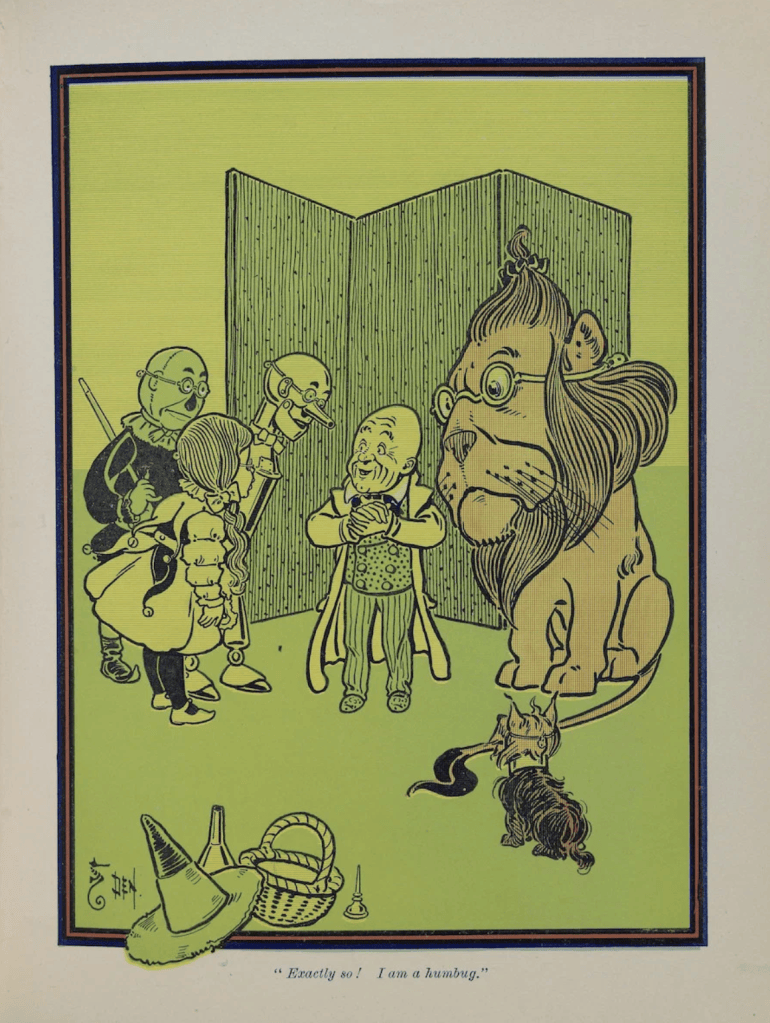
Significantly, Diggs himself appears exempt from the requirement to wear green spectacles. Denslow’s illustration of the exposure scene depicts him without them, and the narrative gives no indication that he participates in the visual regime imposed upon the city’s inhabitants. In this respect, Diggs occupies a privileged position outside the immediate simulation that he has created. Whereas the Ozites experience the Emerald City through a technologically mediated reality, Diggs possesses knowledge of the mechanisms through which that reality is produced. Yet his position outside the city’s visual simulation does not place him outside the broader system of simulation upon which his authority depends. Although he knows that the Emerald City is not truly emerald, he remains dependent upon the continued circulation of the signs and appearances that sustain his identity as Oz, the Great and Terrible Wizard.
If the Emerald City can be understood from a geographical perspective as an imagineered environment dominated by hyperreality—a hyperspace (Knox and Pinch, 2010, p.52)—informed by Diggs’s prior knowledge of urban landscapes before his arrival in Oz, then Oz, the Great and Terrible Wizard, can be understood as an imagineered ruler curated from Diggs’ prior knowledge of political leaders. Just as the city’s greenness is sustained through the compulsory wearing of spectacles, the Wizard’s authority is sustained through a carefully orchestrated system of images, performances, rituals, controlled encounters, and whispered hearsay. Few Ozites ever see him directly. Those who do encounter him do so only through spectacular manifestations—a giant head, a monstrous beast, a ball of fire, or a beautiful fairy or in “any form he wishes” (Baum, 1900, p.29). In each case, representation precedes reality. The Wizard is not simply a man pretending to possess magical powers; he is a simulacrum whose authority derives from the circulation of signs associated with wizardry rather than from any underlying magical reality.
Indeed, the revelation brought about by the falling façade in the Throne Room suggests that there is no authentic Wizard concealed beneath the performance. The discovery of Diggs does not reveal the true Wizard; rather, it reveals that no being corresponding to the sign “Oz, the Great and Terrible Wizard” has ever existed. What appears to be the source of authority is merely another representation. In this sense, Oz approaches Baudrillard’s notion of the simulacrum: a figure whose power rests not upon what he is but upon what he signifies.
Arguably, Diggs occupies both the third and fourth orders of simulation simultaneously. He occupies the third order because the image of the Wizard conceals the absence of the supernatural powers attributed to him. Yet he also approaches the fourth order because the distinction between genuine and simulated wizardry has ceased to matter politically. The authority of Oz derives not from actual magical power but from the collective, taken-for-granted acceptance of the signs of magical power. It is the hyperreal Wizard—not Diggs the balloonist—who rules the Emerald City and all of its “entangled orders of simulacra” (Baudrillard, 1994, p.12).
If Baudrillard helps explain how Diggs acquired authority through simulation, Gramsci helps explain how that authority survived the exposure of its artificial foundations. The fall of the façade reveals the man behind the Wizard, but it does not dissolve the political order he created. Nor does it provoke a crisis of legitimacy among the Ozites. Indeed, authority survives Diggs’s exposure and is ultimately transferred to the Scarecrow with remarkably little disruption. The question therefore shifts from appearances to consent, and from simulation to hegemony.
The Gramscian Wizard of Oz
After Dorothy’s discovery that the Wizard of Oz was not the extraordinary being she had imagined but rather a “common man” (Baum, 1900, p.46) from Omaha, the political order of the Emerald City faced the possibility of a profound crisis of legitimacy. The authority of Oscar Diggs had long rested upon the widespread belief that he possessed supernatural powers, a belief that underpinned not only his personal status but also the broader social order organised around the Emerald City. Had the truth of his origins become widely known, the symbolic foundations of that order may have been destabilised. Recognising the potential consequences, Diggs persuaded Dorothy to keep his secret. Reflecting upon his isolation in Oz, he subsequently devised a plan to leave the country in a hot-air balloon. Yet departure posed a significant political problem. If the Ozites learned that their ruler was abandoning them as an ordinary man rather than as a powerful wizard, the legitimacy of the existing Emerald order could be called into question. Diggs therefore fabricated a final narrative, informing the Ozites that he intended to visit a “great brother Wizard who lived in the clouds” (Baum, 1900, p.52). Having secured their acceptance of this explanation, he transferred authority to the Scarecrow and instructed the inhabitants of Oz to recognise him as their future ruler. The apparent ease with which this succession occurred raises a sociologically significant question: how was a political order founded upon an illusion able to survive the departure of its founder?
From a Gramscian perspective, the unquestioned transfer of leadership from the Wizard to the Scarecrow was the culmination of Diggs’ long-standing hegemonic project, which began shortly after his arrival in Oz. Through this process Diggs established hegemonic leadership over the Ozites. According to Storey (2024, p. 81 emphasis in original), hegemony refers to “a condition in process” whereby a dominant group “does not rule a society but leads it through the exercise of ‘intellectual and moral leadership’.” Over time, this process generates a “specific kind of consensus” organised in the interests of the dominant group (ibid.). The apparent ease with which authority passed from Diggs to the Scarecrow suggests that the Wizard’s authority had become embedded within the institutions, practices, and common sense of Emerald City society. Consequently, allegiance was directed not merely towards Diggs as an individual but towards the broader social and political order that he had established. Arguably, it was the manner of Diggs’ arrival into Oz that was the genesis for the hegemonic project.
The genesis of Diggs’ hegemonic project lay in the manner of his arrival in Oz. As he descended “from the clouds” in his hot-air balloon, the Ozites interpreted this extraordinary event through the lens of their existing common sense. Gramsci (1971, p. 199) describes common sense as “the traditional popular conception of the world”, formed through accumulated everyday experience and inherited beliefs. Because the Ozites already inhabited a world populated by witches, wizards, and other supernatural beings, they interpreted Diggs’ arrival not as a technological achievement but as evidence of exceptional magical power. Moreover, the balloon itself functioned as a visible sign of knowledge and capabilities beyond their own experience. Consequently, Diggs was perceived not merely as a wizard but as a figure possessing extraordinary wisdom and authority. In this way, the circumstances of his arrival provided the symbolic foundations upon which his later exercise of intellectual and moral leadership would be constructed. As argued previously, a Bourdieusian reading would interpret this process as the acquisition of symbolic capital through collective recognition; from a Gramscian perspective, however, it also marked the beginning of a hegemonic project grounded in the consent of the Ozites.
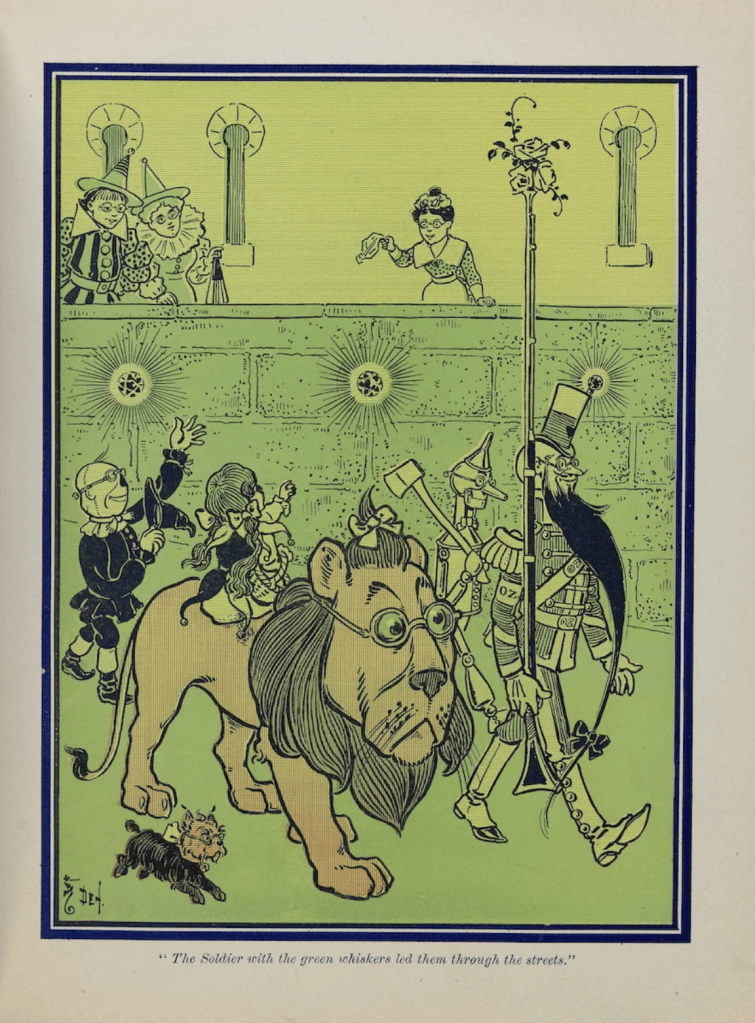
Importantly, Diggs’ arrival occurred in a context already marked by domination and insecurity. The Munchkins and Winkies had been subjected to the rule of the Wicked Witches, creating conditions in which the appearance of an apparently powerful wizard could be interpreted as a source of protection and stability. In Gramscian (1971, p.210) terms, Diggs was imagined by the Ozites as a “charismatic [Wizard] of destiny” who could resolve their “crisis of authority.” Consequently, the consent granted to Diggs was not based solely upon fear of his power but also upon the expectation that he could provide leadership capable of addressing existing threats, such as those posed by the Wicked Witches. This explains why the Ozites consented willingly to Diggs’ order for the construction of the Emerald City. However, Diggs never fully abandoned coercion. As Oz, the Great and Terrible Wizard, he continued to maintain the appearance of “control over the means of violence” (Jones, 2006, p.50) through the terrifying avatars he employed in the Throne Room. So enduring was the Wizard’s mystique that it continued to inspire fear even after his departure, as evidenced by the timidity of the “soldier with the green whiskers” (Baum, 1900, p.540 in the Throne Room.
Yet the symbolic authority generated by Diggs’ spectacular arrival was insufficient in itself to secure long-term leadership. If his authority was to endure, it required institutionalisation. Arguably, the construction of the Emerald City represented the decisive stage in Diggs’ hegemonic project. More than a physical settlement, the city functioned as a political and cultural centre through which his authority could be organised, displayed, and reproduced. The city’s walls, palace, court society, and administrative officials provided a visible manifestation of the Wizard’s power, while its rituals and practices encouraged the Ozites to perceive his leadership as natural and legitimate. In Gramscian terms, the Emerald City can be understood as a network of institutional and symbolic “fortresses and earthworks” (Gramsci, 1971, p.238) that protected and reproduced Diggs’ authority. Through the city, leadership ceased to depend solely upon the extraordinary circumstances of his arrival and instead became embedded within the everyday life and common sense of Ozite society. The Emerald City thus functioned as a rudimentary historic bloc in which material arrangements, political institutions, and popular beliefs became mutually reinforcing, stabilising the Wizard’s leadership.
Central to this process was the compulsory wearing of the green-tinted spectacles. Upon entering the Emerald City, all inhabitants and visitors were required to wear them, with the Guardian of the Gates ensuring compliance. At one level, the spectacles contributed to the city’s spectacular appearance by causing everything within it to appear green, as Dorothy’s account attests. More significantly, however, they functioned as a mechanism through which Diggs’ authority was reproduced at the level of perception itself. If, as Inglis and Thorpe (2019, p.74) suggest, Gramsci’s conception of hegemony may be understood as a form of “mental warfare”, then the spectacles represent one of the most sophisticated instruments in Diggs’ hegemonic arsenal. Through their compulsory use, the spectacles contributed to the formation of a specifically Emerald common sense. They encouraged inhabitants to experience the city’s apparent magnificence as self-evident and natural, thereby reinforcing the legitimacy of the political order organised around the Wizard. The spectacles therefore represent the hegemonic moment of Diggs’ project. Whereas his spectacular arrival established the symbolic foundations of authority and the construction of the Emerald City institutionalised that authority, the spectacles embedded Diggs’ preferred understanding of social reality within the common sense of Ozite society.
This perceptual regime also reveals the interdependence of consent and coercion within Diggs’ hegemonic project. While the spectacles helped cultivate the shared understandings through which the Emerald City was experienced as naturally and self-evidently emerald, the Guardian of the Gates ensured compliance with Diggs’ perceptual regime. In this respect, the spectacles facilitated the production of hegemony, whilst the Guardian supplied the “armour of coercion” (Gramsci, 1971, p. 263) that protected it.
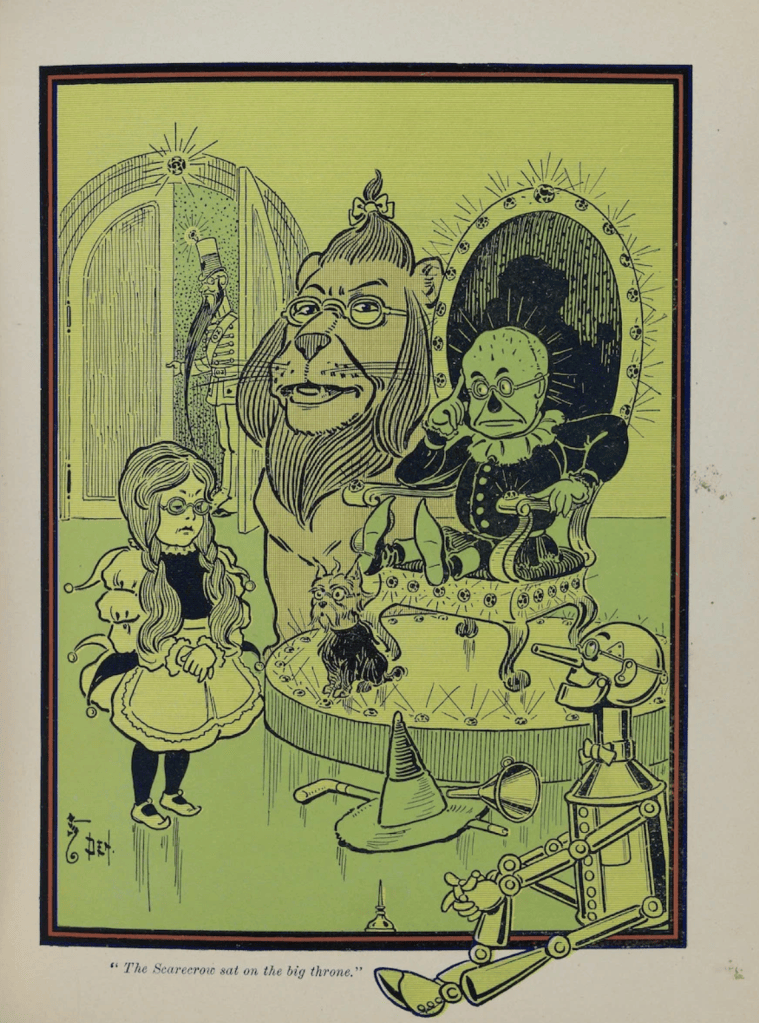
The success of Diggs’ hegemonic project became most apparent following his departure from Oz. If authority had remained dependent upon the personal charisma of the Wizard, the revelation of his ordinary origins and subsequent departure should have precipitated a crisis of legitimacy. Instead, the transfer of leadership to the Scarecrow occurred with remarkably little resistance. Rather than rejecting the Scarecrow because he lacked the supernatural authority previously associated with the Wizard, the Ozites embraced his succession stating, “there is not another city in all the world that is ruled by a stuffed man” (Baum, 1990, p.53), which suggests Diggs’ hegemonic project included the language of boosterism. From a Gramscian perspective, this indicates that Diggs had effectively won a decisive “war of position” (Gramsci, 1971), culminating in the sedimentation of the Wizard’s intellectual and moral leadership into the institutions and common sense of Ozite society. Once established, the hegemonic order no longer required the continual presence of its founder. The authority initially attached to Oz, the Great and Terrible Wizard, had been transferred to the political institutions he created, allowing the Emerald order to reproduce itself independently of the man from Omaha who had first inaugurated it. The survival of the Emerald City after the Wizard’s departure therefore demonstrates the ultimate success of hegemony: the transformation of contingent and historically specific arrangements into a social order experienced as natural, legitimate, and self-sustaining.
Conclusion
While this analysis has necessarily been brief, the four theoretical Wizards demonstrate that The Wonderful Wizard of Ozcontinues to offer rich possibilities for sociological interpretation. Examining this arguably taken-for-granted children’s text through the lenses of Bourdieu, Foucault, Baudrillard, and Gramsci reveals—much like the collapse of Oz’s façade in the Throne Room—the hidden dimensions of power that lie beneath its seemingly simple narrative.
Although Diggs was not the Great and Terrible Wizard the Ozites imagined him to be, from a sociological perspective he was a wizard of a different kind. Through symbolic power, governmentality, simulation, and hegemony, he employed various forms of social magic to persuade the Ozites to accept and reproduce a political order that ultimately served his interests.
Perhaps this is the enduring genius of Baum’s work. At one level, it is an enchanting children’s story populated by witches, wizards, talking scarecrows, and a determined girl from Kansas longing to return home. At another, it is a remarkably perceptive exploration of how authority is constructed, legitimised, and maintained. As Oz, the Great and Terrible Wizard, ultimately confesses, “I have fooled everyone for so long that I thought I should never be found out” (Baum, 1900, p. 46). Without a sociological imagination and gaze, perhaps he never would have been.
References
American Sociological Association (n.d.) ‘William G. Sumner.’ American Sociological Association [Online]. Available from:<https://www.asanet.org/william-g-sumner/> [Accessed 27 June 2026].
Bär, S. (2015) ‘“So Glad to be at Home Again”: L. Frank Baum’s The Wonderful Wizard of Oz as a Rereading of Homer’s Odyssey.’ New Voices in Classical Reception Studies, 10, pp. 15–33. Available at:< Open Research Online > [Accessed: 27 June 2026].
Baudrillard, J. (1994) Simulacra and Simulation. Translated from the French by S.F. Glaser. Ann Arbor: University of Michigan Press.
Baum, L.F. (1900) The Wonderful Wizard of Oz. Project Gutenberg. Available at: Project Gutenberg [Accessed: 26 June 2026].
Baum, L.F. (1908) Dorothy and the Wizard in Oz. Project Gutenberg. Available at: Project Gutenberg [Accessed: 26 June 2026].
Bourdieu, P. (1977) Outline of a Theory of Practice. Translated from the French by R. Nice. Cambridge: Cambridge University Press.
Bourdieu, P. (1990) The Logic of Practice. Translated from the French by R. Nice. Cambridge: Polity Press.
Bourdieu, P. (1991) Language and Symbolic Power. Translated from the French by G. Raymond and M. Adamson. Cambridge: Polity Press.
Bourdieu, P. (2000) Pascalian Meditations. Translated from the French by R. Nice. Cambridge: Polity Press.
Bourdieu, P. (2020) On the State: Lectures at the Collège de France, 1989-1992. Translated from the French by D. Fernbach. Cambridge: Polity Press.
Donovan, A. (2006) ‘Alice and Dorothy: Reflections from Two Worlds.’ In: Children’s Literature Review. Vol. 216. Detroit: Gale Cengage. pp.35-39.
Duncan, C.B. (2024) ‘Teaching Oz in Religious Studies – Part I.’ Wabash Center,13 May [Online blog]. Available from:< https://wabashcenter.wabash.edu/resources/blogs/teaching-oz-in-religious-studies-part-i> [Accessed 27 June 2026].
Foucault, M. (1980) Power/Knowledge: Selected Interviews and Other Writings 1972–1977. Edited by C. Gordon. Translated from the French by C. Gordon, L. Marshall, J. Mepham, and K. Soper. New York: Vintage Books.
Foucault, M. (1991) Discipline and Punish: The Birth of the Prison. Translated from the French by A Sheridan. London: Penguin.
Foucault, M. (2007) Security, Territory, Population: Lectures at the Collège de France, 1977–1978. Edited by M. Senellart. Translated from the French by G. Burchell. Basingstoke: Palgrave Macmillan.
Gramsci, A. (1971) Selections from the Prison Notebooks. Translated and edited from the Italian by Q. Hoare and G. Nowell Smith. London: Lawrence and Wishart.
Greenlees, J. (2016) Why Donald Trump should read the Wizard of Oz before becoming president. The Conversation [Online]. 22 November. Available from:< https://theconversation.com/why-donald-trump-should-read-the-wizard-of-oz-before-becoming-president-69240> [Accessed 26 June 2026].
Huxley, M. (2016) ‘Geographies of Governmentality.’ In: Crampton, J.W. and Elden, S. eds. Space, Knowledge and Power: Foucault and Geography. Abingdon: Routledge. pp. 185-204.
Inglis, D. and Thorpe, C. (2019) An Invitation to Social Theory. 2nd ed. Cambridge: Polity Press.
Jones, S. (2006) Antonio Gramsci. Abingdon: Routledge.
Knox, P. and Pinch, S. (2010) Urban Social Geography. 6th ed. Harlow: Pearson Education Limited.
Littlefield, H.M. (1964) ‘The Wizard of Oz: Parable on Populism.’ American Quarterly, 16 (1), pp.47-58.
Mills, C.W. (2000) The Sociological Imagination. 40th anniversary edn. Oxford: Oxford University Press.
Reynolds, K. (2011) Children’s Literature: A Very Short Introduction. Oxford: Oxford University Press.
Schirato, T., Danaher, G., and Webb, J. (2012) Understanding Foucault: A Critical Introduction. 2nd ed. London: SAGE.
Storey, J. (2024) Cultural Theory and Popular Culture: An Introduction. 10th ed. Abingdon: Routledge.
Suzuki, H. (2025) ‘Plural Masculinities in L. Frank Baum’s Oz Books: Subverting Hegemony, Celebrating Diversity’, Children’s Literature in Education. Available at:< https://link.springer.com/article/10.1007/s10583-025-09625-y?utm> [Accessed: 27 June 2026].
Threadgold, S. (2020) Bourdieu and Affect: Toward a Theory of Affective Affinities. Bristol: Bristol University Press.
Tuan, T.-Y. (1977) Space and Place: The Perspective of Experience. Minneapolis: University of Minnesota Press.
Woodman, D. and Threadgold, S. (2021) This is Sociology: A Short Introduction. London: SAGE.
Zipes, J. (2009) ‘Origins: Fairy Tales and Folk Tales’, in Maybin, J. and Watson, N. eds. Children’s Literature: Approaches and Territories. Basingstoke: Palgrave Macmillan, pp. 26–39.
Suggested citation
Birkenshaw, C. (2026) ‘Constructing the Great and Terrible Wizard: Four Sociological Perspectives on Power in The Wonderful Wizard of Oz.’ Altered States of Academia, 4 July [Online blog]. Available from:< >[Accessed?].
Acknowledgement: Generative AI (ChatGPT) was used as a writing support tool to assist with editing, improving clarity, and refining the structure of the text. The arguments, analysis, and final decisions regarding content remain the author’s own.


Leave a Reply