Dr Mandy Pierlejewski.
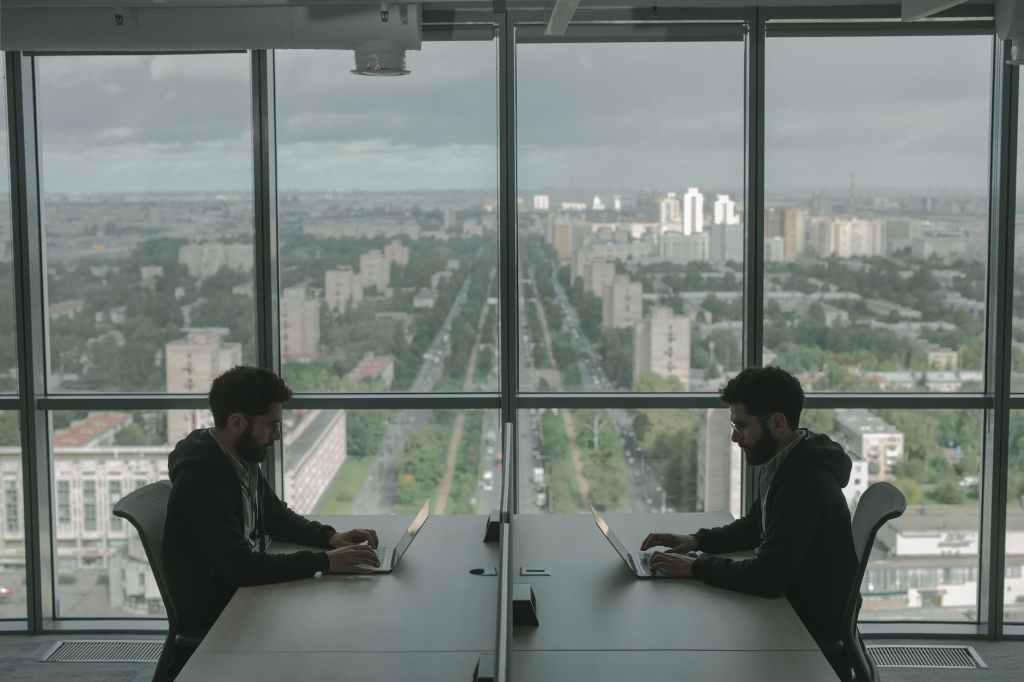
Have you watched the Marvel series Moon Knight (2022) or the cult film Fight Club (Fincher, 1999)? In these and many other stories, the protagonist comes face to face with another version of themselves- a doppelganger. The idea of a doppelganger or ghostly double is a feature of the gothic genre of literature and can also be found in a wide range of texts, examples being Oscar Wilde’s A Picture of Dorian Gray (Wilde, 1891) and Edgar Allen Poe’s William Wilson (Poe, 1850). There have been psychoanalytic analyses of these stories which identify some key features (Rank, 1971; Tymms, 1949). In all of them, the focus is the relationship between the self and the self, which means that they are all about identity. Coming face to face with yourself is always a traumatic event and represents a disintegration of the protagonist’s view of reality. Also, because both versions are actually a part of the self, the doppelganger cannot be killed. This would result in the death of both the protagonist and the doppelganger- an act of suicide.
I have been fascinated with this notion for some time and have used the idea of a doppelganger as a metaphor to explore the world of education. My work has developed into an approach to research, which I call “doppelganger as method” (Pierlejewski, 2024). In this approach, I look for a doppelganger or double in situations where there is some kind of conflict. I then ask myself how this doppelganger functions. What does it do and how does this control situations and people? In other words, I ask, how is it used as a form of power?
In my early work, I focused on the recreation of the child in data. I used the term “data-doppelganger”, which Ben Williamson (2014) coined, to describe this other version of the child which is created from the vast amounts of data collected about children in schools. I argued that this data version of the child was used to make judgements and predictions about the child, rather than focusing on the child themselves (Pierlejewski, 2020a). I found that the data-doppelganger was in fact a distorted version of the child which disadvantaged certain children. In particular, I found that young bilinguals were categorised as “no hopers” as their data was not useful to the teacher.
I developed the idea of the data-doppelganger further in another paper The data-doppelganger and the cyborg self (Pierlejewski, 2020b). Here, I started to look for the doppelganger in a policy document relating to early childhood in England. Analysing Ofsted’s report Bold Beginnings (Ofsted, 2017), I found that the emphasis on data created another version of the child and the teacher which impacted on their notions of the self and identity. Children became aware of what they did not know and saw themselves in relation to others. I called this the mirror of data as when they became aware of the data being collected about them, they realised what they did not know. It was like looking into a mirror to see a different version of the self- a self which was compared to norms such as being able to read or count to ten. I also found that the way we teach in early years was affected by the data-doppelganger as approaches like learning through play were not encouraged as they were too difficult to regulate and measure.
I later turned to the identity of the teacher, examining how datafication, or the huge expansion in the amount of data collected and the importance of this data, impacted on the teacher (Pierlejewski, 2023). Using the data from a research project in which I worked alongside a teacher in a reception class (age 4-5) for a year, I found that the teacher was pulled between two discourses or ways of seeing education. One was data-led education, in which data drives teaching and the other was child-led education, in which the needs of the child are the driver. I found that both were present in the teacher as both are present in schools. I realised that teachers cannot exist outside the datafied world of the current education system and that it is not as simple as rejecting data-led education in favour of child-led education. I began to see the possibility of multiple subjectivities or a complex way of looking at the self which involves being both a data teacher and a child-led teacher simultaneously.
My latest work uses doppelganger as method to explore the world of teacher education (Pierlejewski et al., nd). Instead of focusing on teachers or children, I have asked “where is the double?” in the curriculum for initial teacher education in England. More to come on that but suffice to say, I have found the approach very useful as a way of seeing the curriculum differently. Theory should always be like a pair of glasses that help you see the world differently. It should be a tool to help you think and this is how I have used doppelganger as method over the last seven years.
Fight Club (1999) Directed by David Fincher. United Kingdom: 20th Century Fox.
Ofsted (2017) Bold Beginnings – The Reception Curriculum in a Sample of Good and Outstanding Primary Schools [Online]. Manchester: Crown. Available from: <https://www.gov.uk/government/uploads/system/uploads/attachment_data/file/663560/28933_Ofsted_-_Early_Years_Curriculum_Report_-_Accessible.pdf>.
Pierlejewski, M. (2020a) Constructing Deficit Data Doppelgängers: The Impact of Datafication on Children with English as an Additional Language. Contemporary Issues in Early Childhood, 21 (3) September, pp. 253–265.
Pierlejewski, M. (2020b) The Data-Doppelganger and the Cyborg-Self: Theorising the Datafication of Education. Pedagogy, Culture and Society, 28 (3) July, pp. 463–475.
Pierlejewski, M. (2023) ‘I Feel like Two Different Teachers’: The Split Self of Teacher Subjectivity. Pedagogy, Culture and Society [Online], 31 (3), pp. 515–530. Available from: <https://doi.org/10.1080/14681366.2021.1924845>.
Pierlejewski, M. (2024) Doppelganger as Method: A Framework for Examining Datafication. Contemporary Issues in Early Childhood.
Pierlejewski, M., Murtagh, L. & Humphreys, H. (n.d.) The Simple View of Teaching : Authorised Pedagogies , Curriculum and the Neoliberal Learner in Preservice Teacher Education . Dr Mandy Pierlejewski Leeds , United Kingdom Dr Lisa Murtagh University of Manchester Manchester , United Kingdom Dr Huw Humphrey. Asia-Pacific Journal of Teacher Education.
Poe, E. A. (1850) William Wilson. In: Wilmot Griswold, R. ed., The Works of the Late Edgar Allen Poe, Volume 1. New York: J.S. Redfield.
Rank, O. (1971) Double : A Psychoanalytic Study. Chapel Hill: University of North Carolina Press.
Slater, J. (2022) Moon Knight. Marvel.
Tymms, R. (1949) Doubles in Literary Psychology. Cambridge: Bowes and Bowes.
Wilde, O. (1891) The Picture of Dorian Gray. London: Penguin Books Ltd.
Williamson, B. (2014) Reassembling Children as Data Doppelgängers : How Databases Are Making Education Machine-Readable. In: Powerful Knowledge Conference, 2014. Bristol, pp. 1–14.

 Altered States of Academia
Leave a comment