Claire Birkenshaw
“Some have suggested a barrier is immoral. Then why do wealthy politicians build walls, fences, and gates around their homes? They don’t build walls because they hate the people on the outside, but because they love the people on the inside” (Donald Trump quoted in The Guardian, 2019, n.p.).
Urban scholar, Leonie Sandercock, posits that the design, look and feel of urban environments is shaped by “discourses of fear” ([2005], 2016, p.219). Urban planning, she argues, can be read as the attempt to find ‘solutions’ to address people’s primary fear of disorder and disease, often associated with the Other. Sandercock identifies four typical types of planning antidote to address and manage the close proximity of the urban Other: policing; spatial segregation and containment; moral reform; and assimilation. Accordingly, human responses to fear can be ‘read’ in the urban landscape. As Zukin (1995) points out, fear is aestheticized in the cityscape, symbolically reminding people whether they belong in specific areas or not. This is demonstrated superbly by Terasa Caldeira’s (1996) study of the Brazilian city, São Paulo.
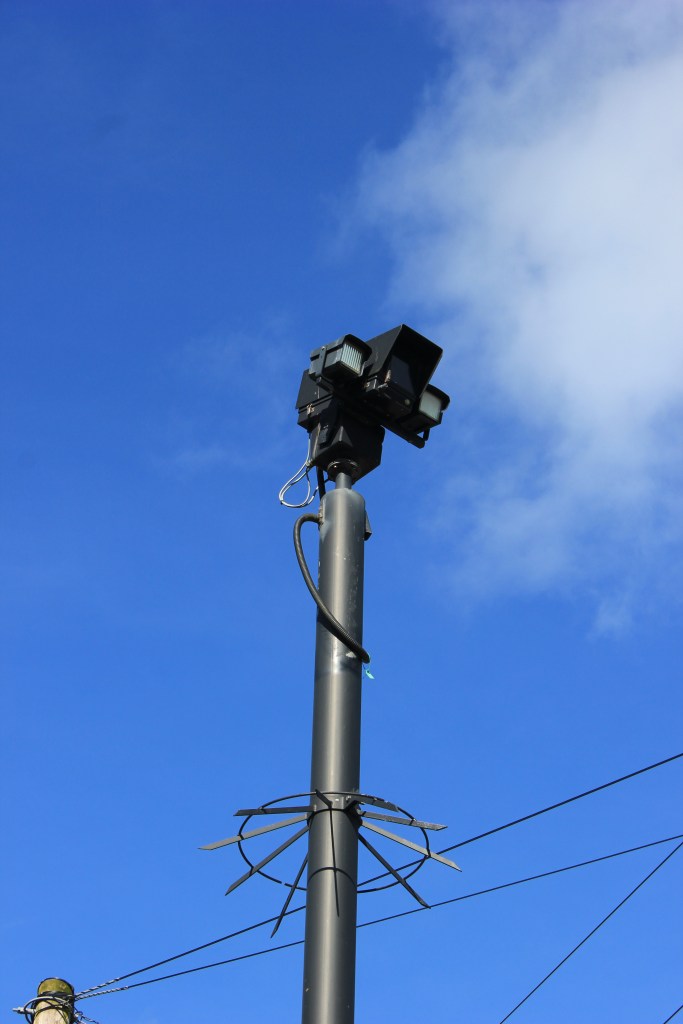
In her thought-provoking paper, Fortified Enclaves: The New Urban Segregation, Caldeira details and discusses how fear of violent crime during the 1980s and early 1990s set in motion “strategies of protection” (Caldeira, 1996, p.307). In turn, this led to a proliferation of privatised projects of fortification across São Paulo. The consequence, she argued, was a city pockmarked with “fortified enclaves” (ibid., p.303), identifiable by their menacing forms of fortification – the typical security triad of “high walls and fences, armed guards, and technologies of surveillance” (ibid., p.304), which Caldeira terms the “aesthetics of security” (ibid., p.308). To some, the aesthetics of security seduce because they symbolise the promise of “total security” (ibid., p.311) to those within its securitised cocoon. The flipside, as Ghertner, McFann and Goldstein (2020, p.7) counter, is that these aesthetics of security exude a “palpable hostility toward the street”. In effect, they help to fashion a localised fearful “affective atmosphere” (Threadgold, 2020, p.68), which is sensed as a foreboding feel of place by those out in the open. As such, it raises anxiety and primes individuals to be alert to danger and be prepared for a possible confrontation with the Other. For those categorised as Other, they too are anxious because they know they arouse suspicion. Thus, they too are primed for confrontation, but in their case, with security enforcers. In a Bourdieusian sense, aesthetics of security act as an affective “symbolic channel of communication” (Bourdieu, 2001, p.2) to those in its presence therefore should be considered as a form of spatial symbolic violence which ‘stick together’ (Ahmed, 2014) fearful feelings about ‘objects of security’, place, and “certain bodies” (Anderson, 2017, p.26).
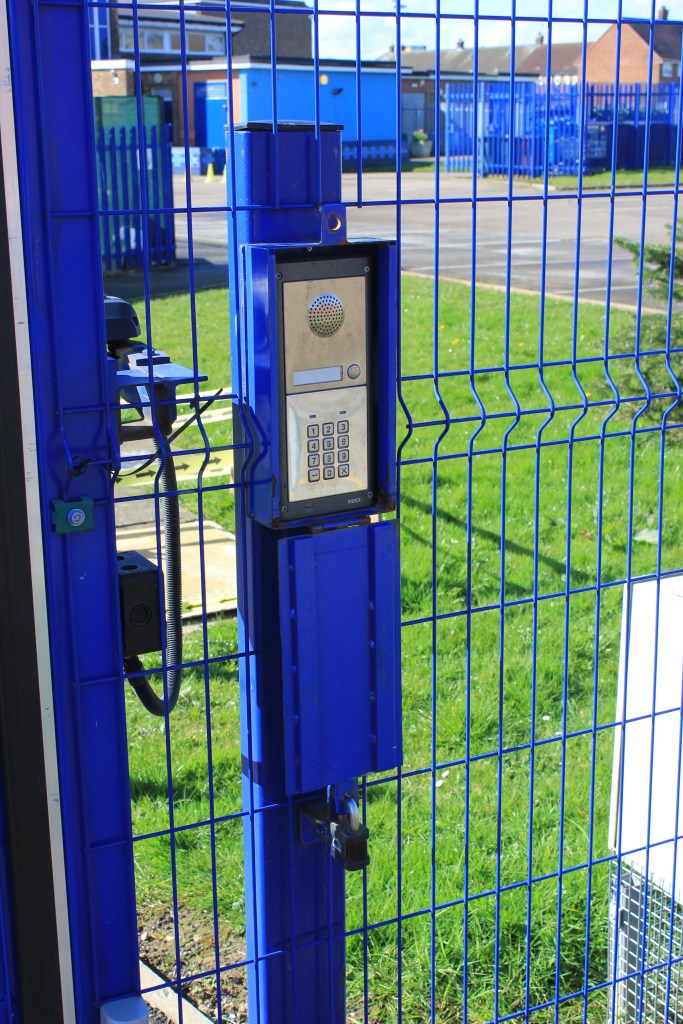
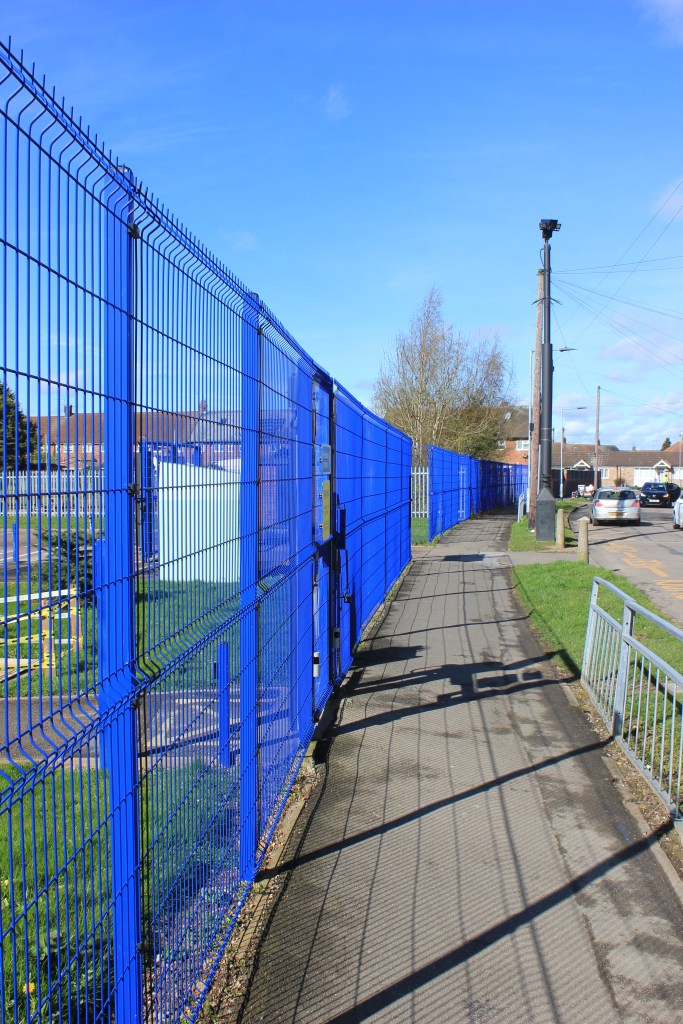
These fortification processes – spatial separation and segregation, suspicion and surveillance – concerned Caldeira because of the affects it would have on the relationships between people and, ultimately, democracy itself. Fast forward to now, and we can observe similar fortification processes aestheticizing urban schools in England. On one hand, we may feel that school fortification keeps children safe because they are cocooned in total security within the confines of the school. On the other, we should consider the affects school fortification has on children, families, staff and local communities because it may heighten anxiety and perpetuate fear of the Other. As Freire ([1993] 2017, p.21) persuasively argues, dehumanisation does not just affect the oppressed, it also affects the oppressor too: oppression is a dehumanising ‘totality’ for both oppressor and oppressed.
References
Ahmed, S. (2014) The Cultural Politics of Emotion. 2nd ed. Edinburgh: Edinburgh University Press.
Anderson, B. (2017) Affect. In: Jayne, M. and Ward, K. eds. Urban Theory: New Critical Perspectives. Abingdon: Routledge. pp.19-29.
Bourdieu, P. (2001) Masculine Domination. Translated from the French by R. Nice. Cambridge: Polity Press.
Caldeira, T.P.R. (1996) Fortified Enclaves: The New Urban Segregation. Popular Culture, 8, pp.303-328.
Freire, P. ([1993] 2017) Pedagogy of the Oppressed. Translated from the Portuguese by M. Bergman Ramos. London: Penguin.
Ghertner, D.A., McFann, H. and Goldstein, D.M. (2020) Introduction: Security Aesthetics of and beyond the Biopolitical. In: Ghertner, D.A., McFann, H. and Goldstein, D.M. eds. Futureproof: Security Aesthetics and the Management of Life. Durham and London: Duke University Press. pp.1-32.
Sandercock, L. ([2005] 2016) Difference, Fear and Habitus: A Political Economy of Urban Fears. Hillier, J. and Rooksby, E. eds. Habitus: A Sense of Place. 2nd ed. Abingdon: Routledge. pp.219-234.
The Guardian (2019) Donald Trump’s border wall speech – in full. The Guardian [Online]. 9 January. Available from:< https://www.theguardian.com/us-news/2019/jan/09/donald-trumps-border-wall-speech-in-full> [Accessed 9 April 2024].
Threadgold, S. (2020) Bourdieu and Affect: Towards a Theory of Affective Affinities. Bristol: Bristol University Press.
Zukin, S. (1995) The Cultures of Cities. Malden: Blackwell Publishing.
Suggested citation:
Birkenshaw, C. (2024) Fortified Childhood. Altered States of Academia, 18 April [Online blog]. Available from:<https://alteredstatesofacademia.blog/2024/04/18/fortified-childhood/> [Accessed?].
 Altered States of Academia
Leave a comment